
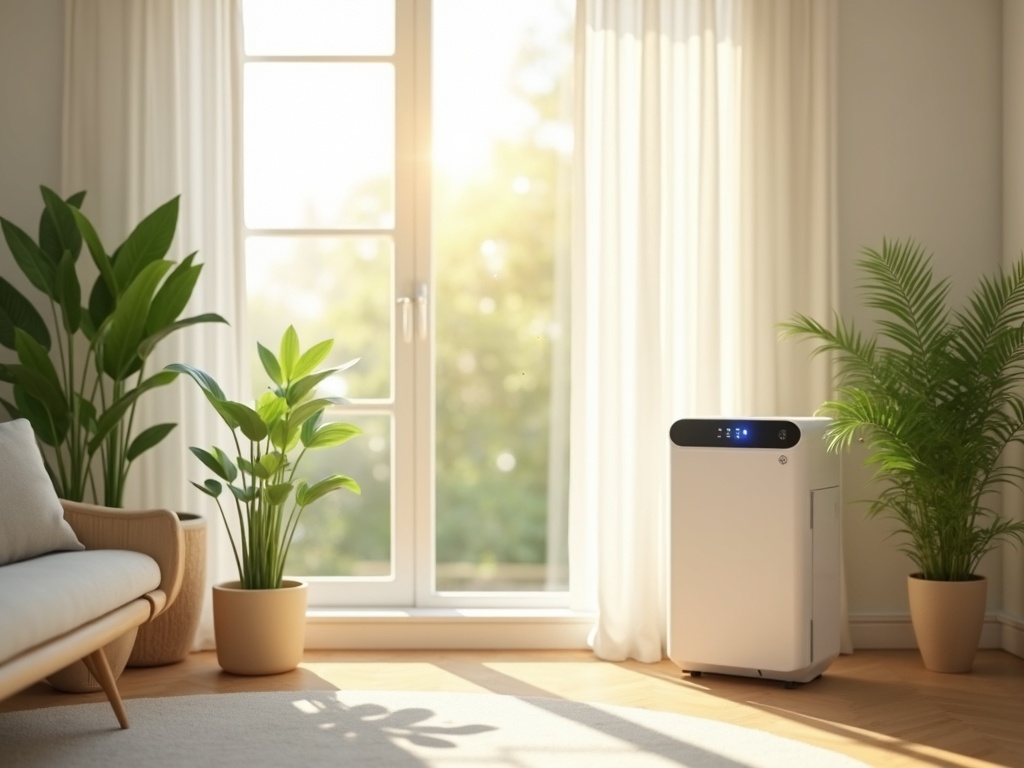
The Ultimate Guide to Improving Indoor Air Quality This Summer
Most people think about air conditioning as temperature control. Set it, forget it, stay cool. But the system circulating air through your home all summer is doing something far more significant – it’s filtering, dehumidifying, and redistributing everything in your indoor environment, good and bad.
According to the Environmental Protection Agency (EPA), indoor pollutant levels can be two to five times higher than outdoor levels, and occasionally more than 100 times higher. That gap widens in summer, when homes stay sealed and systems run hard.
The Summer Humidity Problem
Heat gets the attention, but humidity is the bigger threat to indoor air quality during summer months. When relative humidity climbs above 50%, conditions inside ductwork become ideal for dust mite proliferation and mold spore development. These aeroallergens don’t just irritate allergies – they cycle through your home continuously as long as the system runs.
Your air conditioner’s evaporator coils naturally pull moisture from the air as part of the cooling process. That moisture has to go somewhere. It drains through a condensate line into a tray, and then out of the system. If that drain line gets blocked – which happens more than most homeowners realize – standing water sits in the tray. Within days, you’re dealing with microbial growth and bacterial odors being distributed through every vent in the house. Clearing the condensate tray and drain line isn’t optional maintenance. In summer, it’s essential.
The Ventilation Paradox
Let’s address an issue that is often overlooked – the behavior you engage in to stay cool in your home contributes to making the air quality worse.
For instance, when you trap conditioned air inside by sealing your windows and doors, you are also trapping volatile organic compounds found in cleaning supplies and new paint, particulate matter produced while cooking, and any biological particles your HVAC unit may be spreading around. Researchers refer to this as the ventilation paradox – while sealed homes stay cooler, they also become more polluted. Opening a window only invites pollen and outdoor PM2.5 inside, particularly during wildfires or times of high smog.
The solution isn’t to merely open a window. What you need is mechanical ventilation. An Energy Recovery Ventilator will remove stagnant indoor air, introduce fresh outdoor air, and pre-cool/pre-heat it for you. That way, you don’t trade comfort for air quality. Alternatively, a properly designed HVAC unit coupled with a high MERV rated filter will provide the required filtration without exposing you to the outdoors. MERV 11 and higher filters can trap smaller particles that a standard fiberglass filter cannot.
What A Filter Change Actually Does (And Doesn’t Do)
Upgrading that filter regularly is a good plan. But it won’t solve your indoor air problem.
What most people are unaware of is that even with a fresh filter, a lot of the household dust and the finest particulates escape the filter and lay straight onto the internal motor housing and evaporator coil where they cannot be seen or reached by a vacuum. This contamination is left to sit on a wet surface, creating a breeding ground for molds and bacteria, and is then simply blown back into the air as your cool, conditioned air travels over this grimy surface.
A professional service cleans the coil surface, checks the operation of the blower, inspects the drain and removes the biological buildup that’s been accumulating since the last time anyone looked inside the unit. If you haven’t had it done in the last twelve months, you don’t actually know what’s circulating through your home.
For households with allergy sufferers or young children, this matters considerably more than a standard tune-up framing suggests.
Using Smart Thermostats To Improve Air Cycling
Most current thermostats have a mode that allows you to run the blower without activating the compressor. It’s called “Fan Only” and you aren’t using it enough.
Set the fan to run for 20 minutes or so each hour during the height of pollen season, and you’ll wind up passing much more of your air through the filter without driving the temperature so low the mildew-climate thrives. Combined with a HEPA-grade or high-MERV filter, this approach can meaningfully reduce indoor aeroallergen counts without opening windows or running the compressor all day.
If you’re dealing with symptoms that seem tied to time spent indoors – headaches, persistent fatigue, respiratory irritation – that pattern has a name. Sick Building Syndrome is well-documented in residential settings with poor indoor air quality, not just commercial buildings. The fix is rarely dramatic. It’s usually a combination of better filtration, properly maintained equipment, and deliberate air cycling.
What Actually Moves The Needle
Summer air quality at home comes down to two things: how well your system is maintained and how deliberately you use it.
Filter ratings matter. Condensate lines matter. Professional cleaning of internal components matters. None of it is complicated, but all of it requires attention you probably haven’t been giving it. Your air conditioner has been working hard all season – treat it as the respiratory infrastructure it actually is.