
How Hard Water Shortens the Lifespan of Your Home Appliances
The majority of homeowners don’t consider the quality of their water until they face an issue. For instance, a water heater stops working six years before its time, a dishwasher begins to leave a white film on every glass, or a washing machine displays an error code. Repairs are made, bills are paid, and yet no one realizes the root cause can be the water itself.
Hard water is the culprit in more costly home repairs than you might imagine. The havoc it wreaks isn’t immediate or obvious, rather, it’s gradual and almost unnoticeable.
The Damage Hiding in Your Fixtures and Fittings
Scaling is not exclusive to water heaters. It spreads through the entire plumbing system, building up in copper and PEX pipes, and slowly but surely reducing their interior diameter. Water pressure drops at such a slow rate that most people won’t notice until they’re holding an old shower head next to a new one.
Appliances that have solenoid valves, washing machines, dishwashers, they take damage in a different way. These tiny valves are timed to open and close in specific intervals and regulate the amount of water entering the appliance. Mineral grits and scale particles disrupt this motion, causing the valves not closing fully, which prompts leakages; or closing and sticking shut, which triggers the machine to fault. Repair calls are placed for machines that were mechanically failing due to water quality.
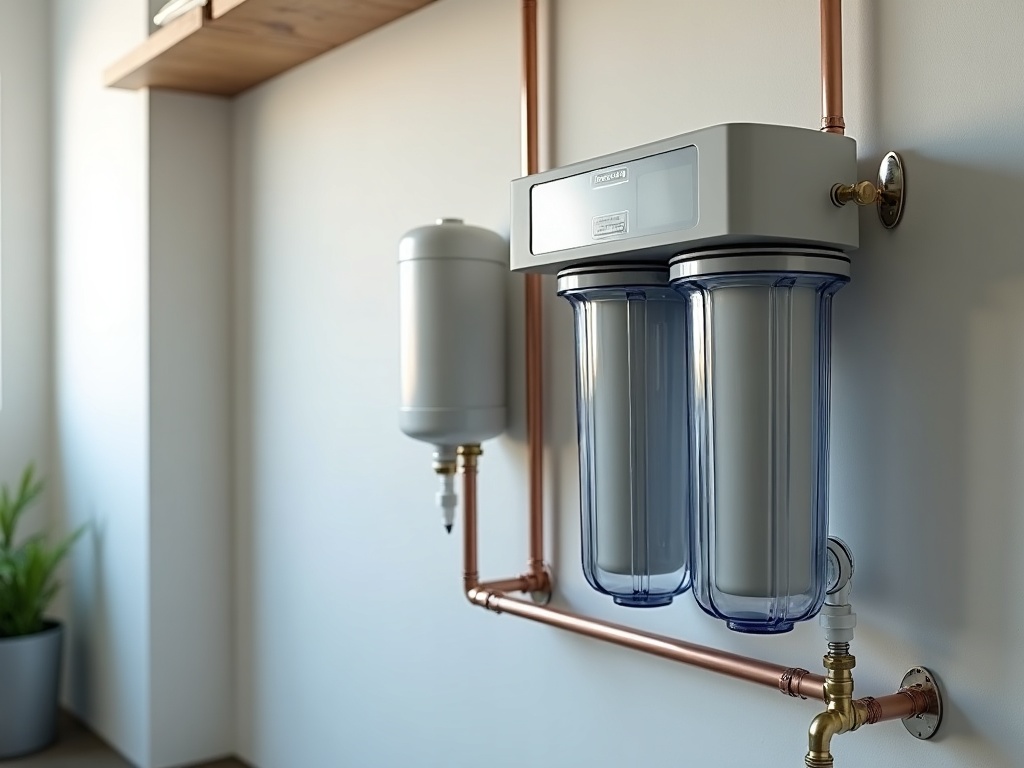
Rather than applying post one-off appliance treatment in each of these cases, a whole house water filtration system intercepts the minerals at the main waterline before they ever get a chance to encounter a heating element or a solenoid valve. It’s a single intervention to prevent damage to the entire network.
The Chemistry That Kills Appliances
Water with calcium and magnesium ions is considered hard. When this type of water is cool, the minerals pose no threat. However, when heated, the minerals solidify. This chalky substance is called limescale. Limescale builds up over time on surfaces such as the inside of pipes, tanks, or heating elements.
The heating element has to run longer and hotter to heat the water as the limescale prevents direct contact with the water. A unit with limescale build-up will ultimately fail, and usually sooner than later. An electric-powered water heater in a hard water area builds up 30 pounds of limescale per year.
Gas and some tankless electric water heaters are devices that heat the water indirectly by heating a separate compartment (and, thus, the contact surfaces) where water is stored before the heated water is eventually mixed and used. Gas heaters lose up to 24.2% of their heat transfer because of limescale build-up over the unit’s lifetime (Battelle Memorial Institute).
Tankless Systems Take the Hardest Hit
Tankless water heaters are often advertised as being more durable than tank systems due to the absence of tank corrosion and less wear-and-tear from not constantly heating 40 gallons of water, but both of these things mostly depend on what’s in your water.
How to Spot Hard Water Damage Before it Gets Expensive
There are a few clues that can indicate hard water in a home:
White or yellowish crust around taps, showerheads, and the base of faucets is limescale out in the open, the same substance steadily accumulating out of sight inside everything downstream from the supply line.
A knocking or rumbling noise from a storage water heater is usually scale deposits on the heating element or sediment shifting around inside the tank. The heater has started to waste energy.
Water pressure reduced at more than one outlet, not just a single faucet, is probably due to mineral build-up inside the pipes, since the chances of a blockage happening simultaneously in multiple places is pretty slim.
Soap that forms curd rather than suds, or leaves scum on a washcloth, is the mineral (calcium and magnesium) ions in the water bonding with the soap to form an insoluble residue. Hard water makes soap less effective.
If any two of these conditions coexist, it’s fairly safe to assume that the home’s plumbing system is suffering from the effects of hard water.
Stop Treating the Symptoms
Simply put, fixing or replacing appliances that frequently malfunction because of scale build-up will not remove the root cause of the problem. The source of hard water is still there, and will continue to cause issues with your appliances and plumbing. The most important thing you can do is treat hard water before it enters your home.